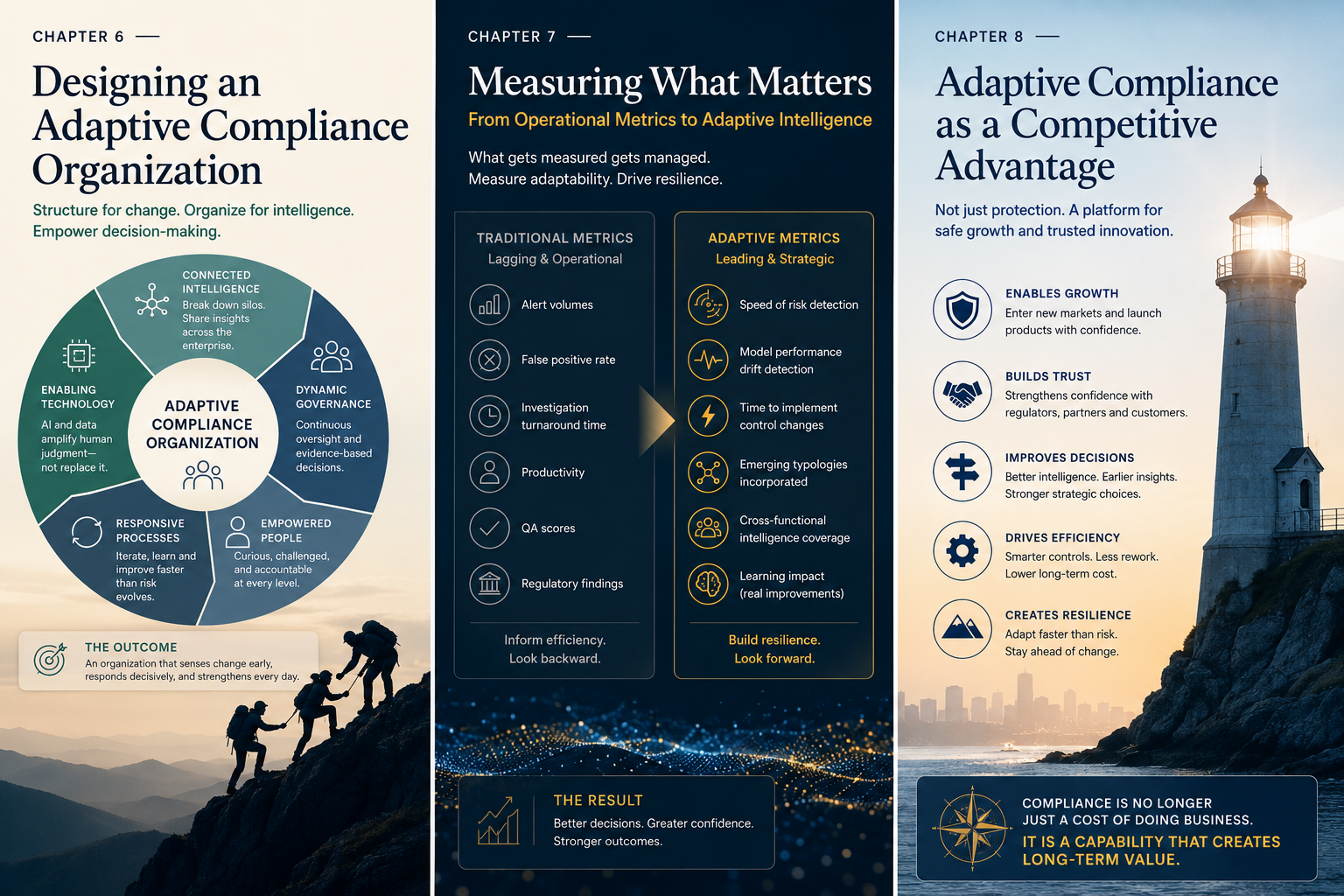
The future of financial crime compliance is often framed as a technology question. In practice, the harder challenge is organizational. Institutions may possess sophisticated tools and capable specialists yet still struggle to connect insights, challenge assumptions and translate new intelligence into control changes.
From Specialist Functions to Connected Intelligence
Sanctions, transaction monitoring, fraud, customer due diligence, investigations, quality assurance and model governance each see a different part of the risk environment. Adaptive organizations preserve that expertise while ensuring intelligence moves continuously between functions.
Governance as a Dynamic Capability
Governance forums should spend less time reviewing historical dashboards and more time understanding what has changed, what those changes mean and which assumptions require challenge. The defining characteristic is not meeting frequency, but the quality and timeliness of the information informing decisions.
Organizations That Learn
Every investigation, product launch and regulatory review provides information about how risk is evolving. Adaptive organizations deliberately convert those experiences into wider organizational learning.
Technology enables adaptation. Governance directs it. Culture sustains it.